Gait Physical Therapy VR
VR Research
Unreal Engine 5
Iterative Design
C++
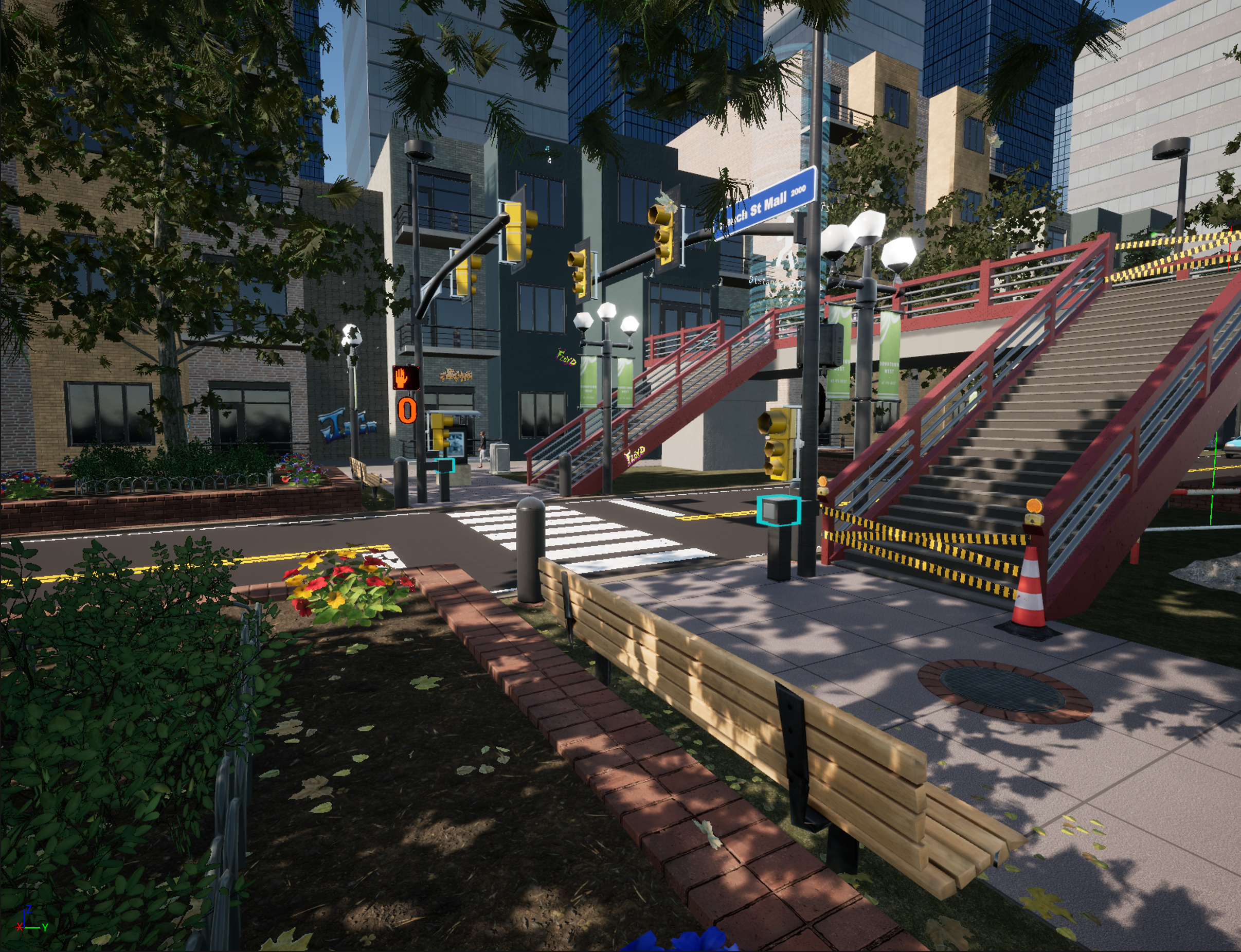
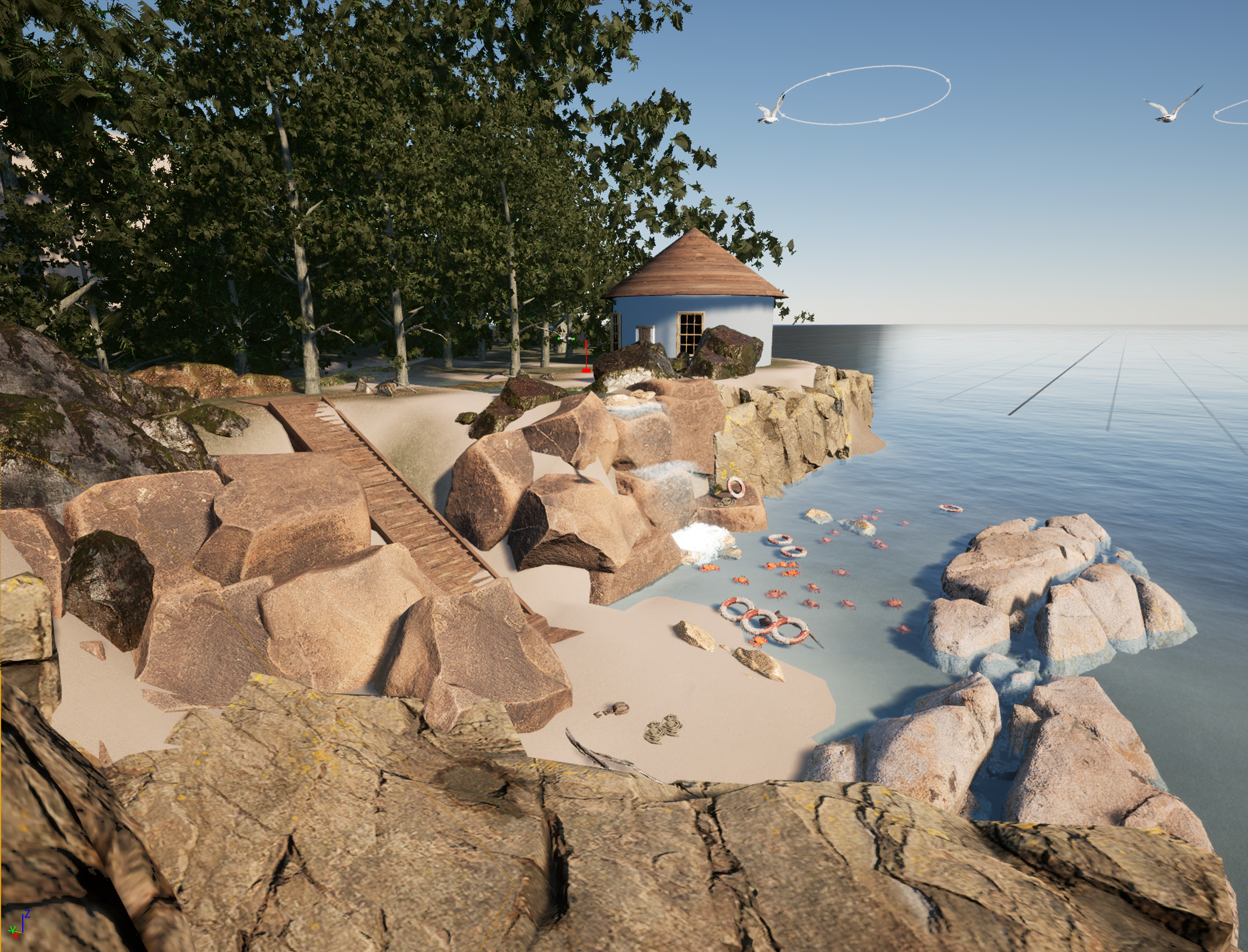
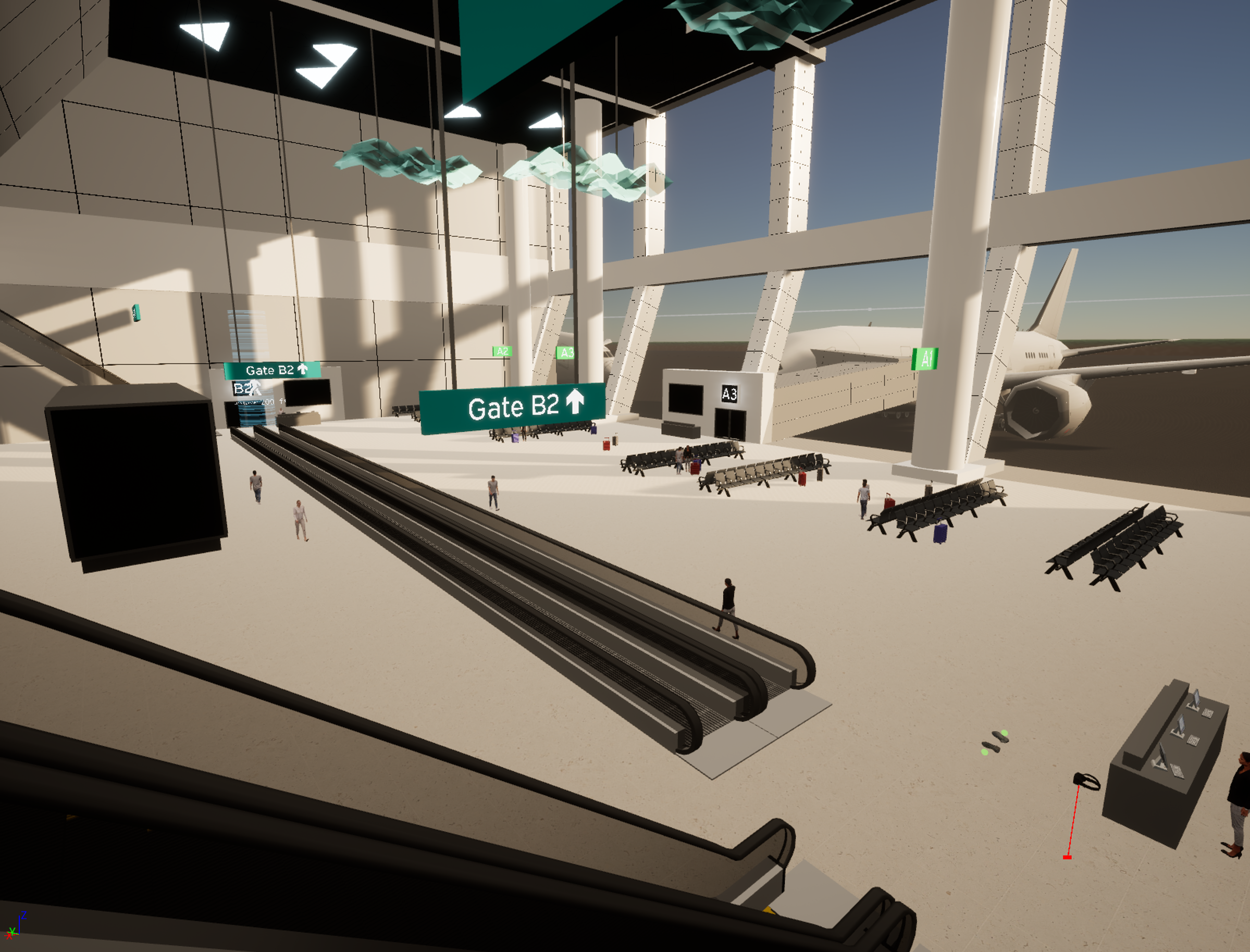
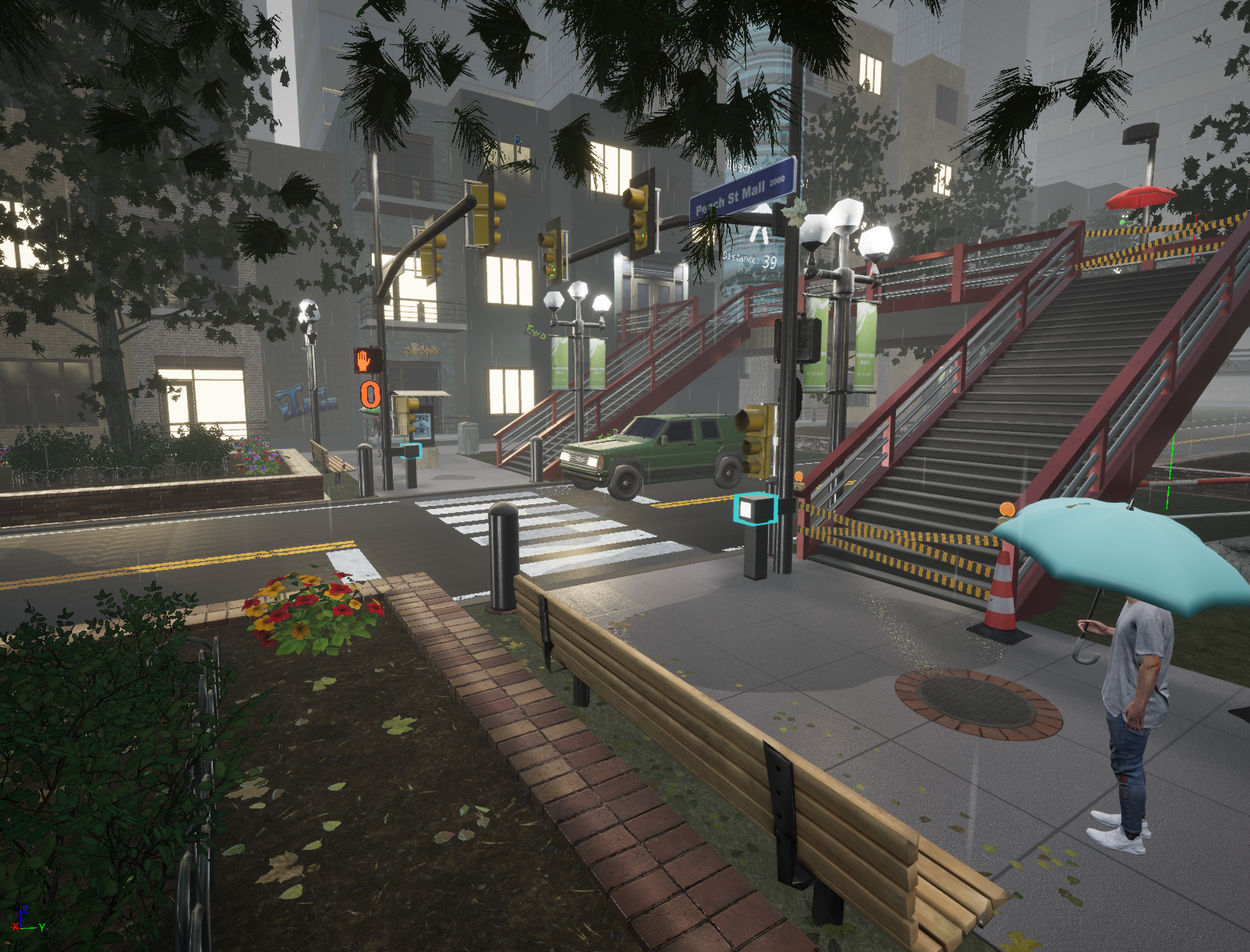
Overview
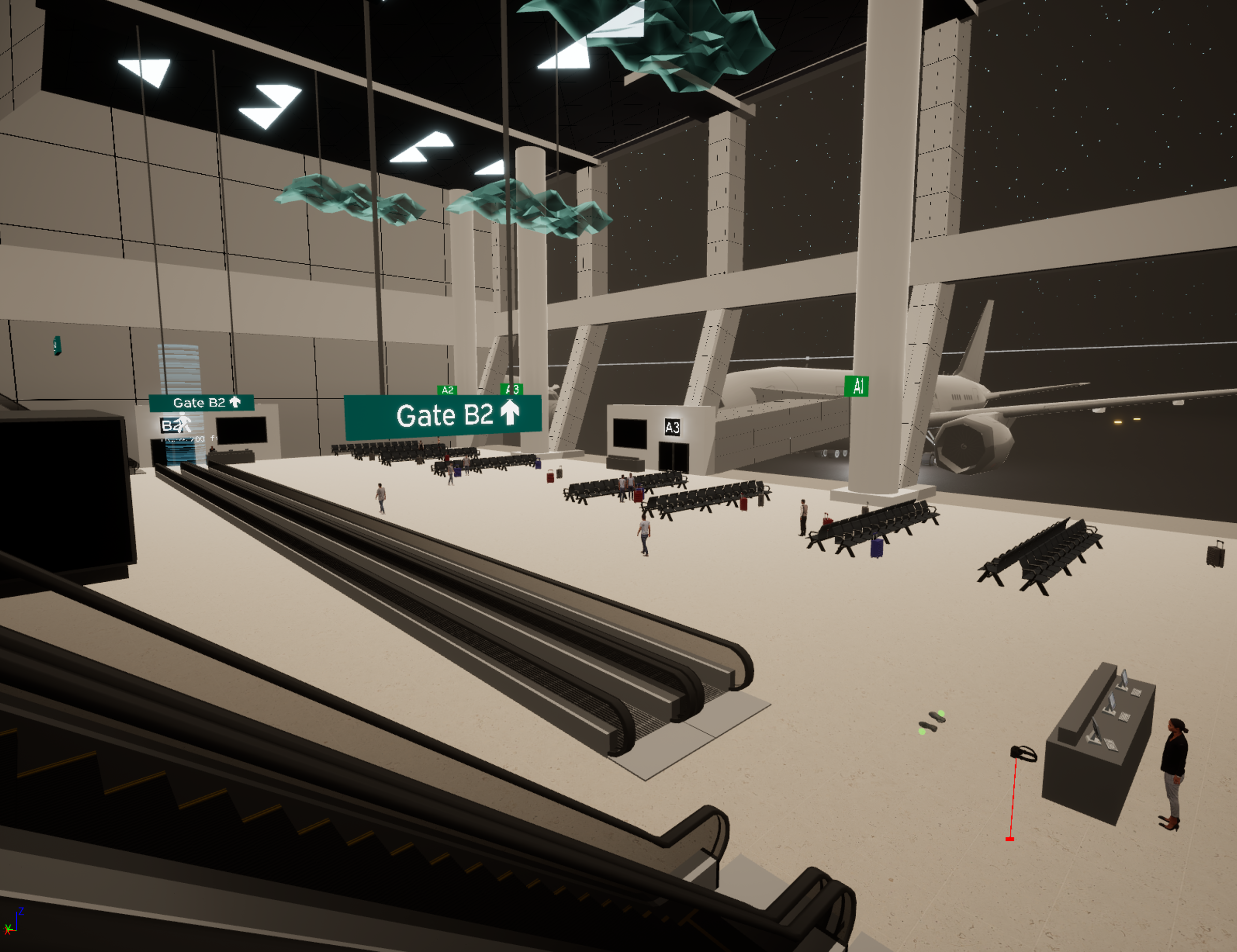
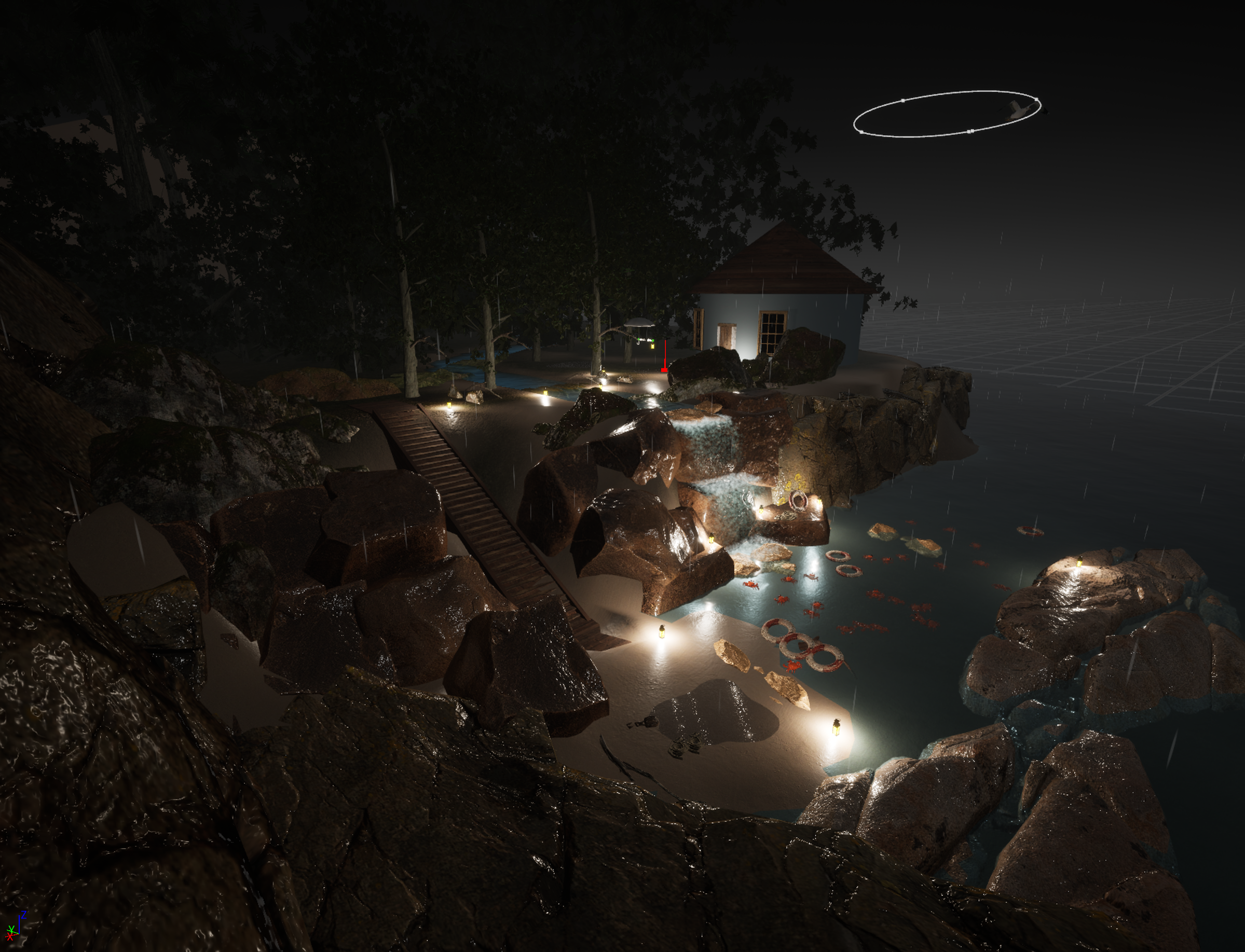
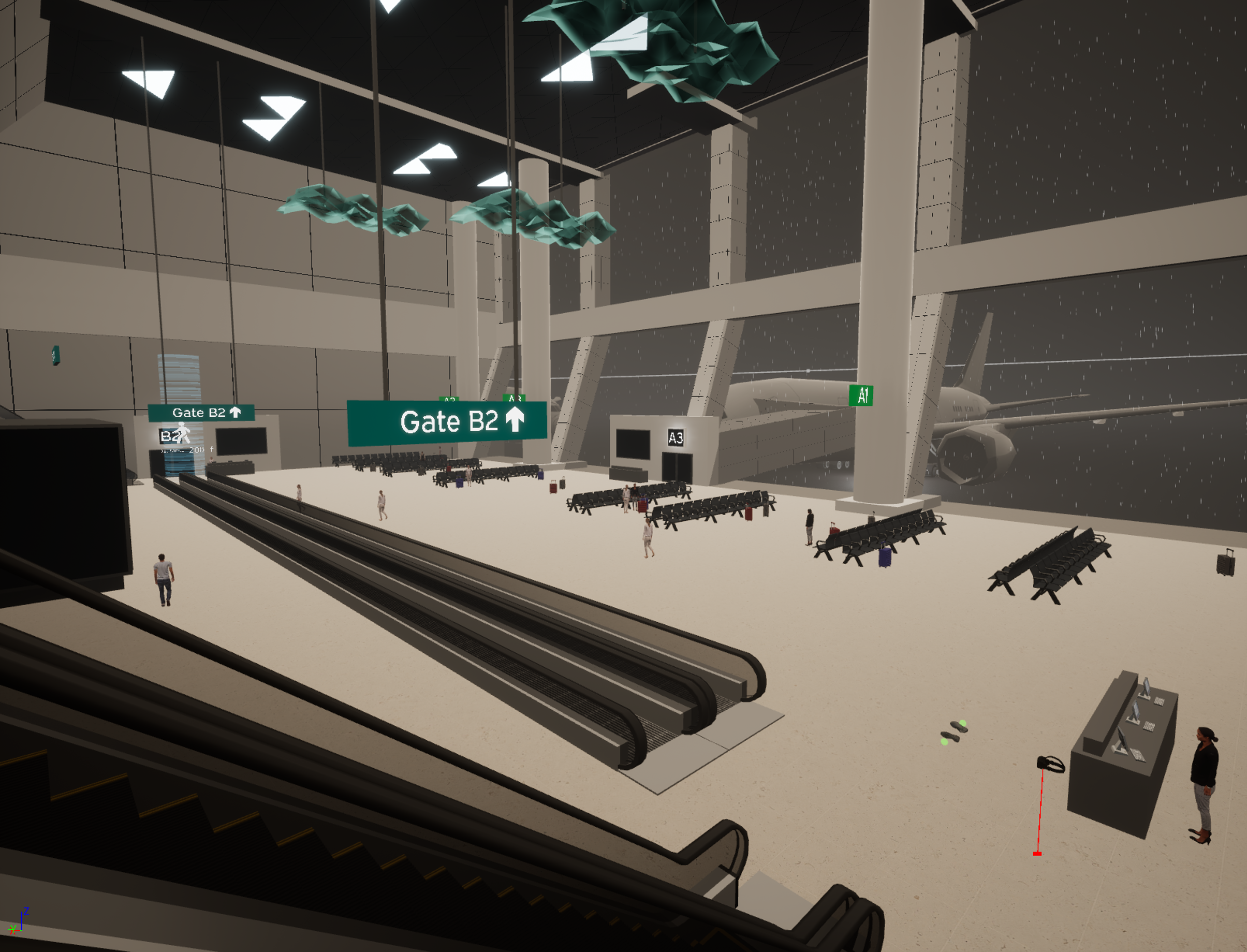
This is a project I worked on during my time as a research assistant for Dr. Hee-Tae Jung at Indiana University. I was brought onto this project to lead and coordinate development efforts. The goal of this project was to create several interactable VR environments to be used within clinical trials.
Designs within this project were informed by data collected during a preliminary interview phase. Additionally, designs were iterated consistently after meeting with stakeholders and gathering feedback. Despite the many unexpected challenges presented during this project, we were able to consistently make informed decisions about solutions we should problem-solve towards.
Status: Completed
Team Size: 6
Tools Used:
- Unreal Engine 5
- Blender
- P4 Visual Client
Contributions
- Coordinated and lead development efforts among team
- Created and executed physical deployment strategy for the system
- Designed environment flow to align with overall therapy goals
- Prototyped and implemented functionality
- Implemented data-logging system
- At the end of the session, CSVs will be saved containing data about the session. Some of which contain thousands of rows of information.
- Consistently met with and gathered feedback from collaborators and project stakeholders
- Blocked out and designed environment visuals
Design Process
Early on in our process, we wanted to solidify the most important elements that we had to design around. These elements were largely influenced by the overall research goals, however they were also influenced by physical constraints. Because this project is specifically focused on patient Gait practice, it needed to allow the participant to physically walk a considerable distance. This would be accomplished by attaching participants to a ~50 foot long linear overhead track via harness. They would then put on the VR headset, and walk straight while being guided by a physical therapist.
With this physical environment in mind, we outlined our design goals.
- (1) The environments should mirror real-life activities.
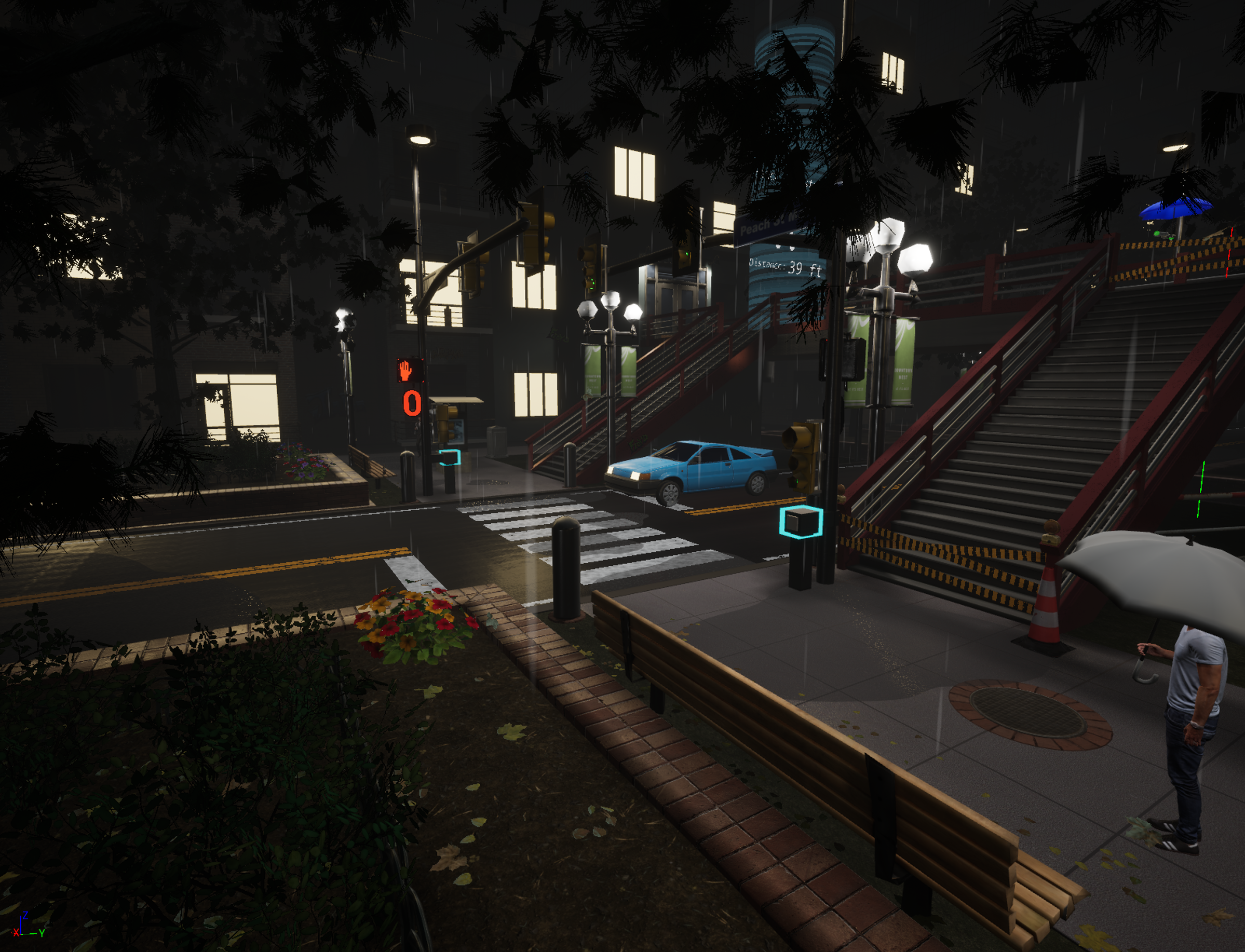
Patients with neurological impairments often find it difficult to complete specific common activities, and replicating these scenarios physically is not always feasible. For example, many patients have difficulty quickly crossing a busy street in an urban setting. That’s where our VR comes in. We wanted to recreate some of these scenarios to mirror a real-life activity that would otherwise be difficult to practice within.
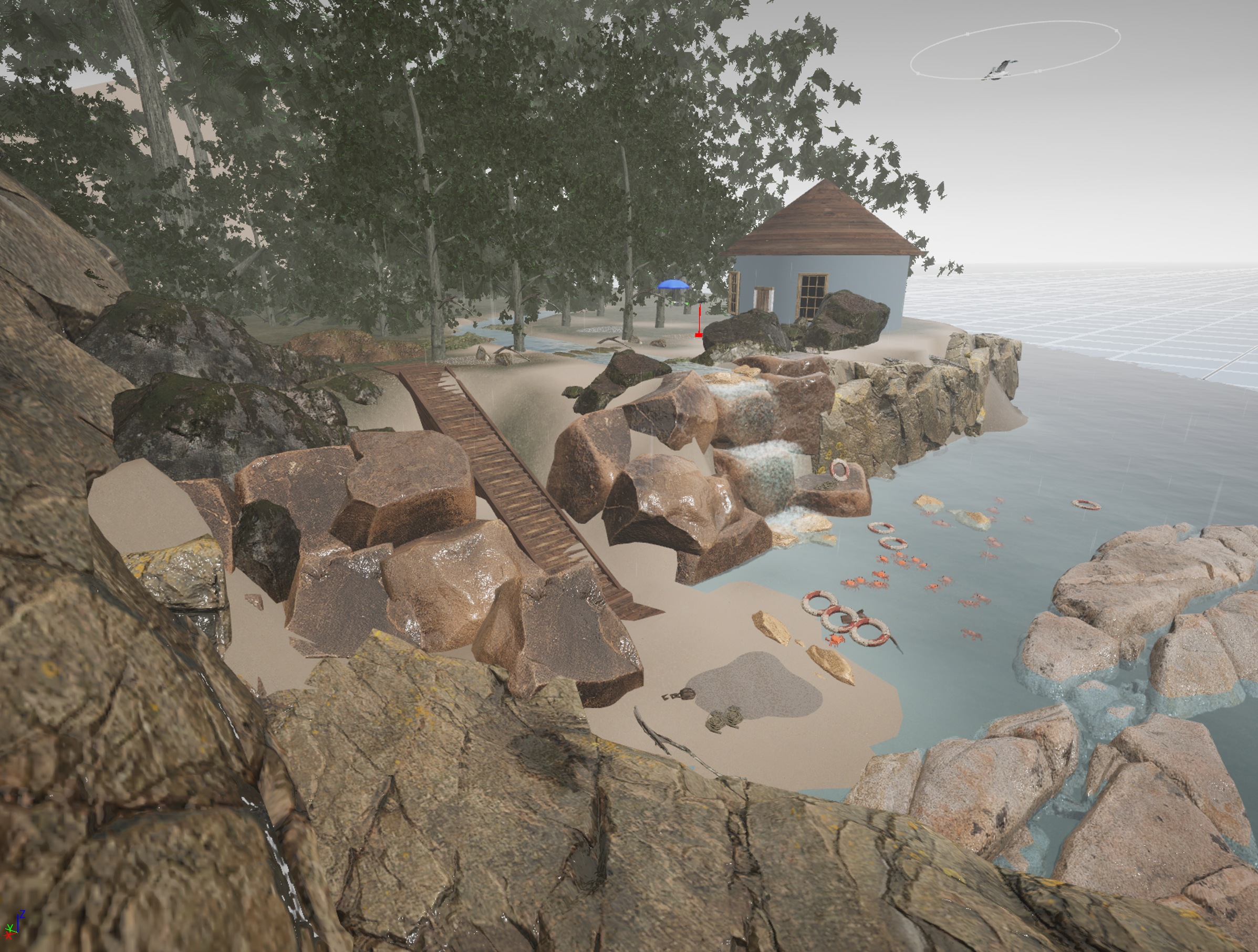
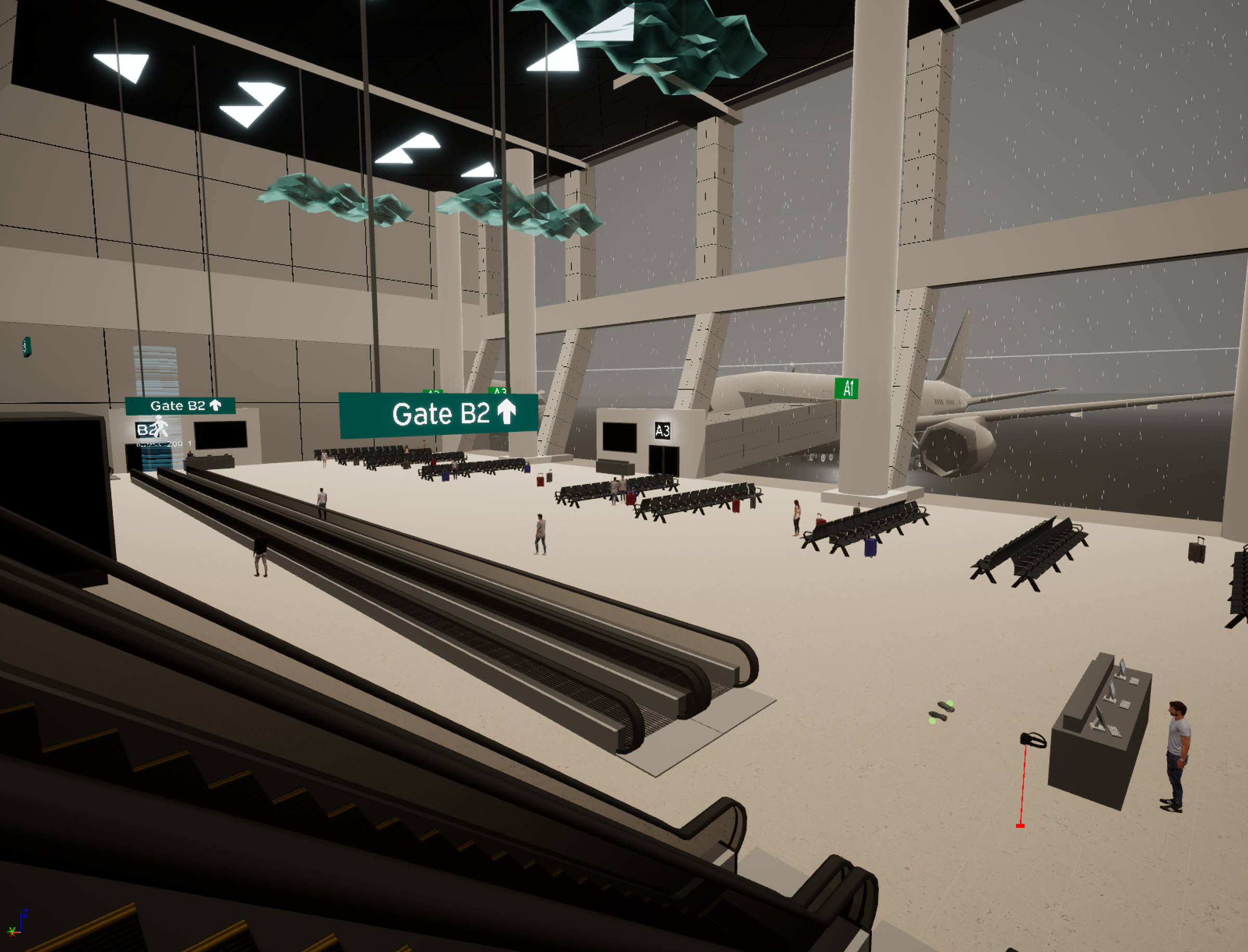
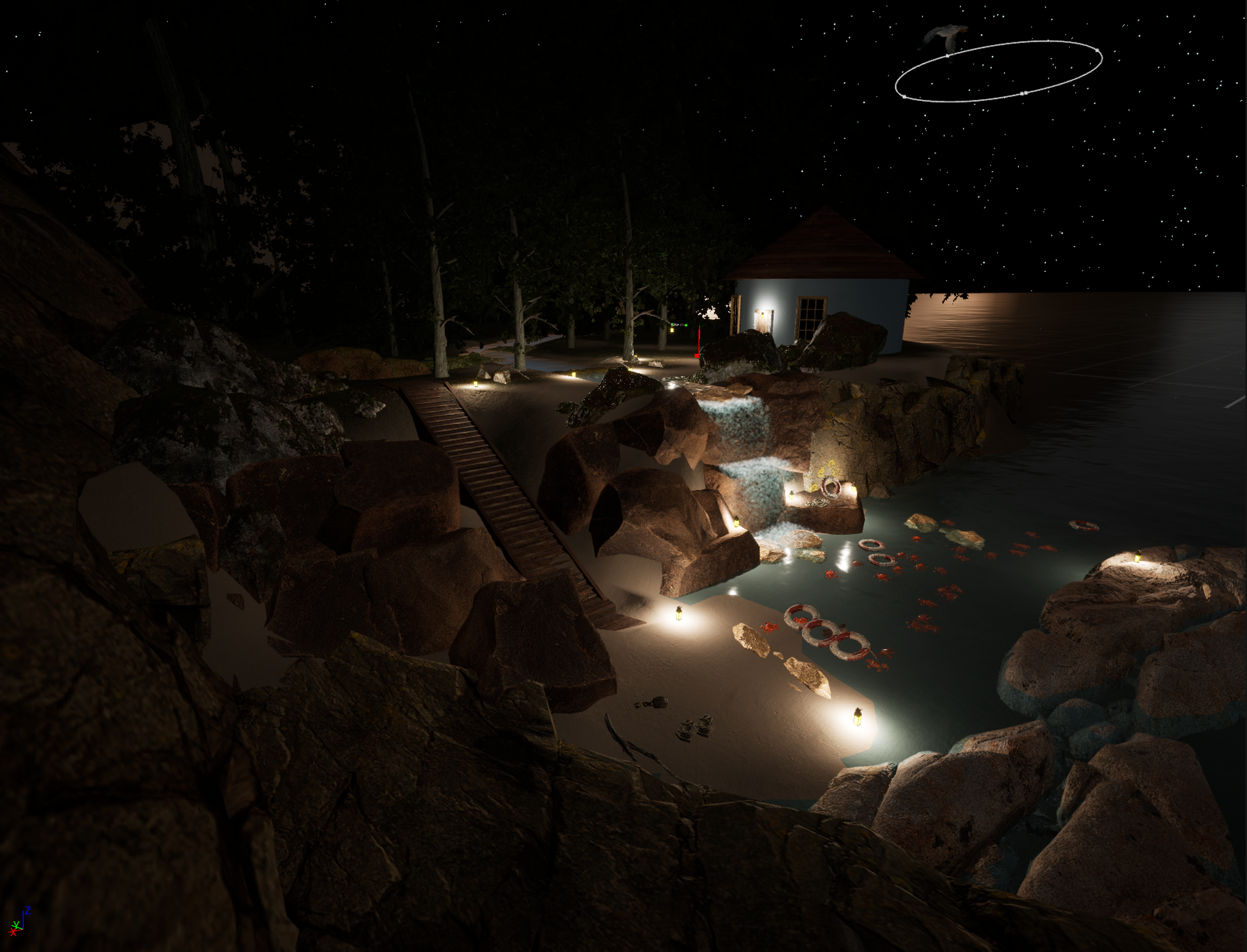
- (2) The project should involve 3 different environment locations. Each must have their own unique physical therapy goal.
The specific physical exercises that patients do during physical therapy can greatly vary. Because of this, we wanted to give the therapists administering the experiment the ability to cater the VR environment towards their patient’s needs.
- (3) The participant must only be required to physically move on a 1 dimensional axis.
Because they will be attached to an overhead linear track, they will only be able to move along 1 axis. This meant that any environments we designed had to take this into consideration when we wanted the patient to move to another area on the map.
Environment Iteration
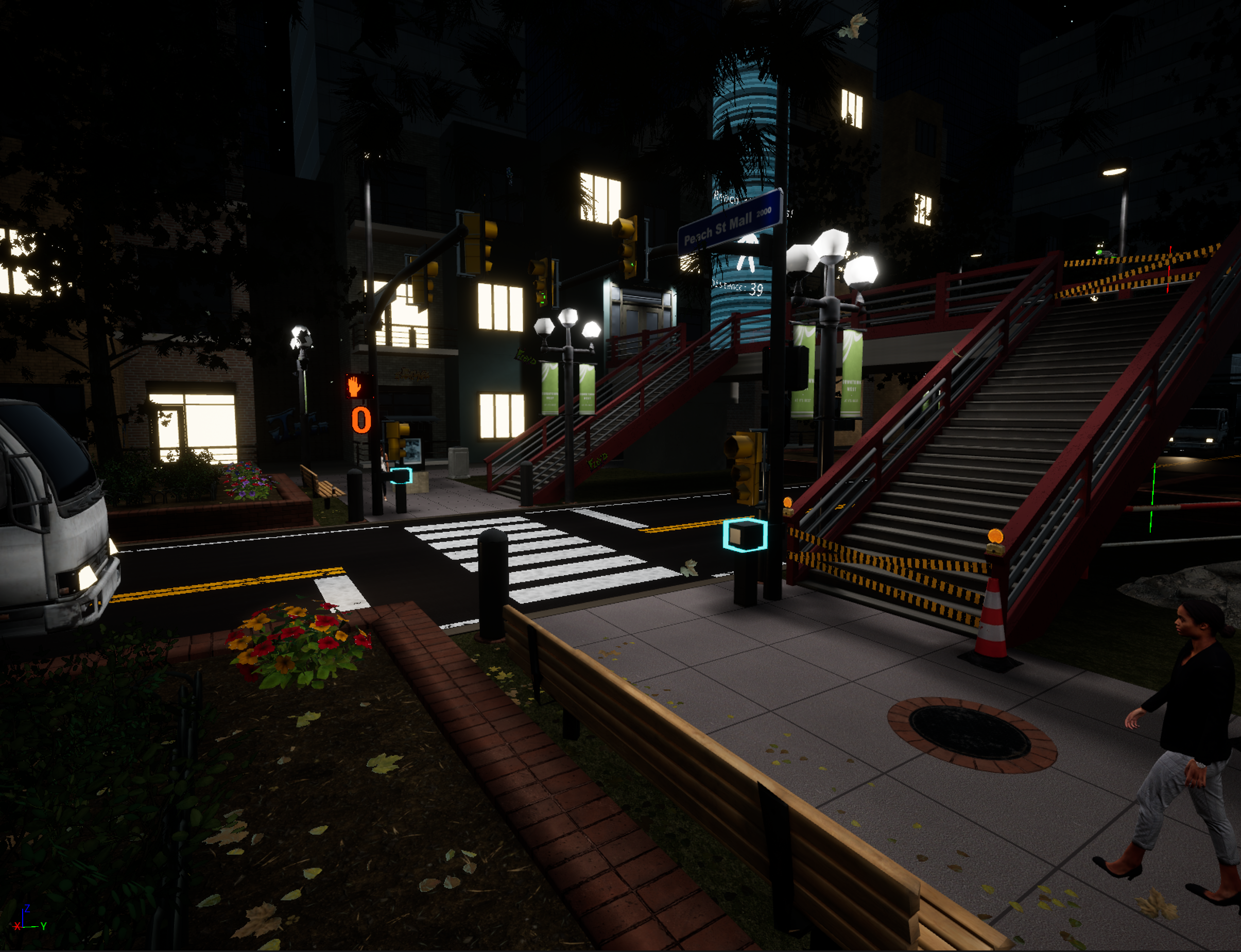
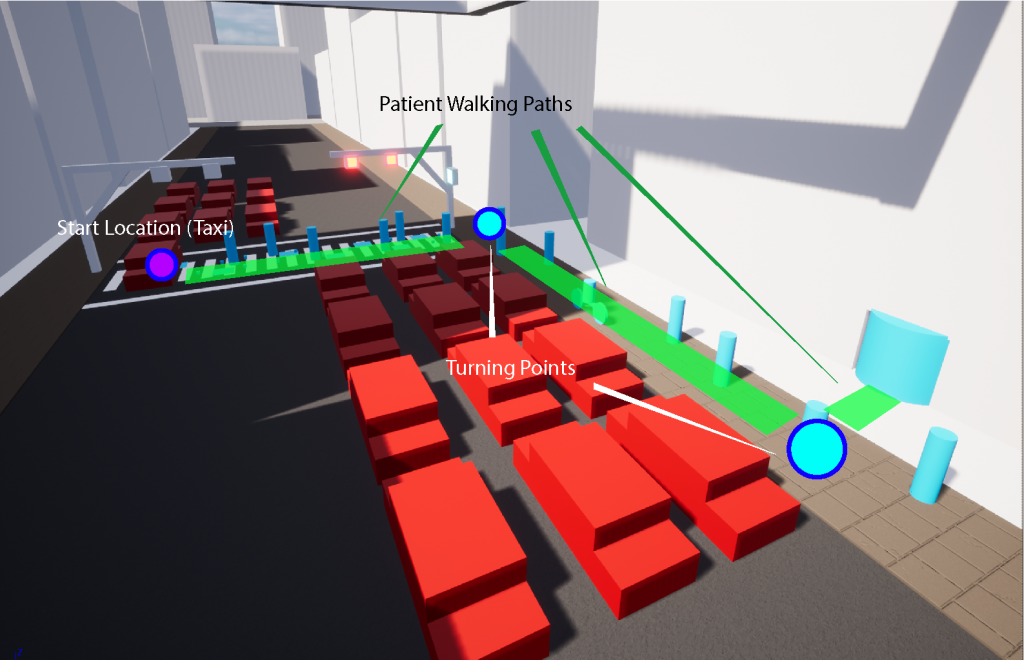
We started off by focusing solely on a single environment: A downtown urban area. The idea behind this environment was that patients would walk from area to different areas, and then take a taxi. After exiting the taxi, they would cross a busy road while dodging other pedestrians, then enter a building to refill a prescription. Although this design included sections where the participant would seemingly have to move 2-dimensionally, we planned to mask this by fading to black and reorienting the participant’s rotation virtually, prompting them to turn completely around.
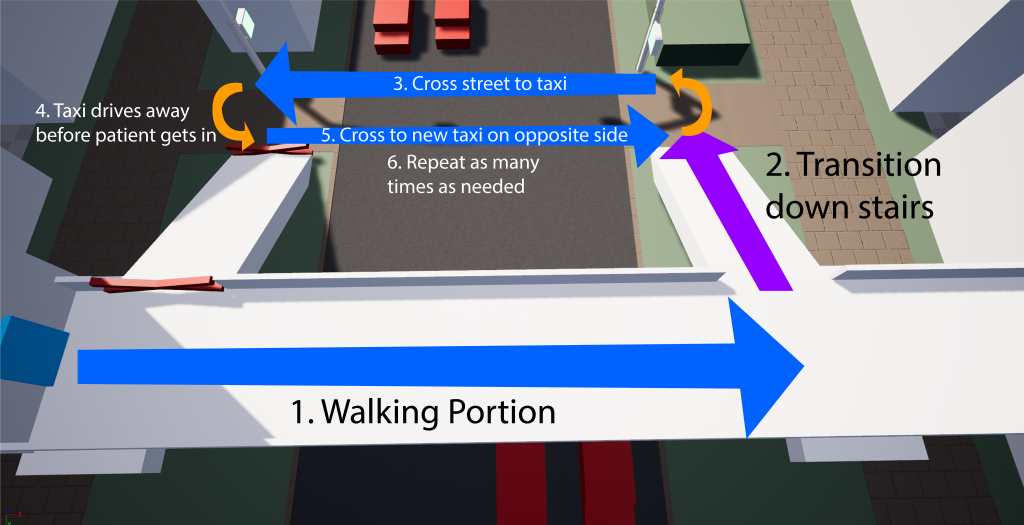
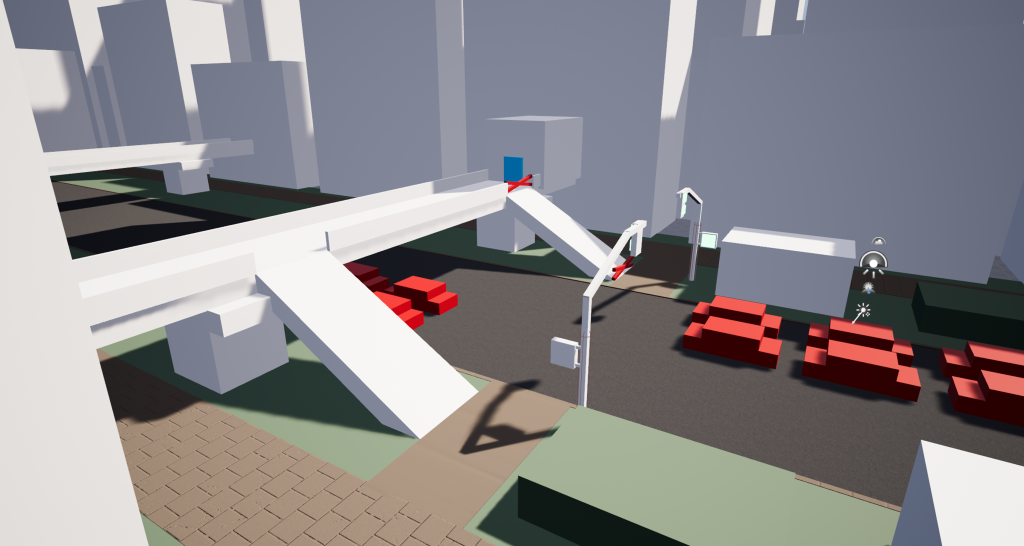
However after talking to physical therapists and gathering feedback, we concluded that this amount of activity steps would complicate the therapy administration process. Because of this, we narrowed the scope of the activities. Now, the patient starts at the top of a walking bridge. They are prompted to walk to the opposite end of the bridge, where they automatically transition down them. Once they reach the bottom of the stairs, they can cross the busy street.
Physical Challenges
Throughout the duration of this project, we faced many challenges while trying to finalize the deployment method of the system due to the abnormal physical environment.
- (1) Allowing the participant to move 50 feet in VR without connectivity issues.
This was by far the biggest challenge that we faced throughout the project. Because the HTC Vive Pro 2 headset is wired by default, we had to figure out how we would extend its maximum range beyond the intended limit. Our initial solution was to use an extended cable, purchased from HTC Vive specifically for this purpose. However, after much testing and troubleshooting, the cable solution presented several issues. It created a significant obstacle as it dragged along the floor from the computer to the headset, and was easy to accidently trip over and disconnect. In addition to this, we frequently experienced connectivity issues with it. We explored the possibility of making modifications to the deployment room by allowing the cable to snake up through the ceiling, however we did not have authorization to make such a change to the space.
After exploring other options, we decided to purchase a wireless adapter for the headset. Despite my initial skepticism about the connection quality and range of the wireless adapter, it proved to solve all of our issues with this specific ordeal.
- (2) Finding a way to deploy base stations for VR use.
Because the HTC Vive Pro 2 requires several base stations to face the play area, we had difficulty finalizing our method for doing so. Our initial plan was to mount them directly to the wall, however after several months of trying to coordinate this specific effort, we were not authorized to make the change to the room.
This limited us to using tripod mounts with the base stations. However, these took up more physical space and were easy to accidently bump into and knock over. To address this, we bought several sandbags that could straddle the tripod legs, giving them greater stability. We were also able to find specific locations for the base stations, where they would not be taking up as much walking space in the room.
- (3) Allowing physical therapists to control the VR environment while they are not near the computer.
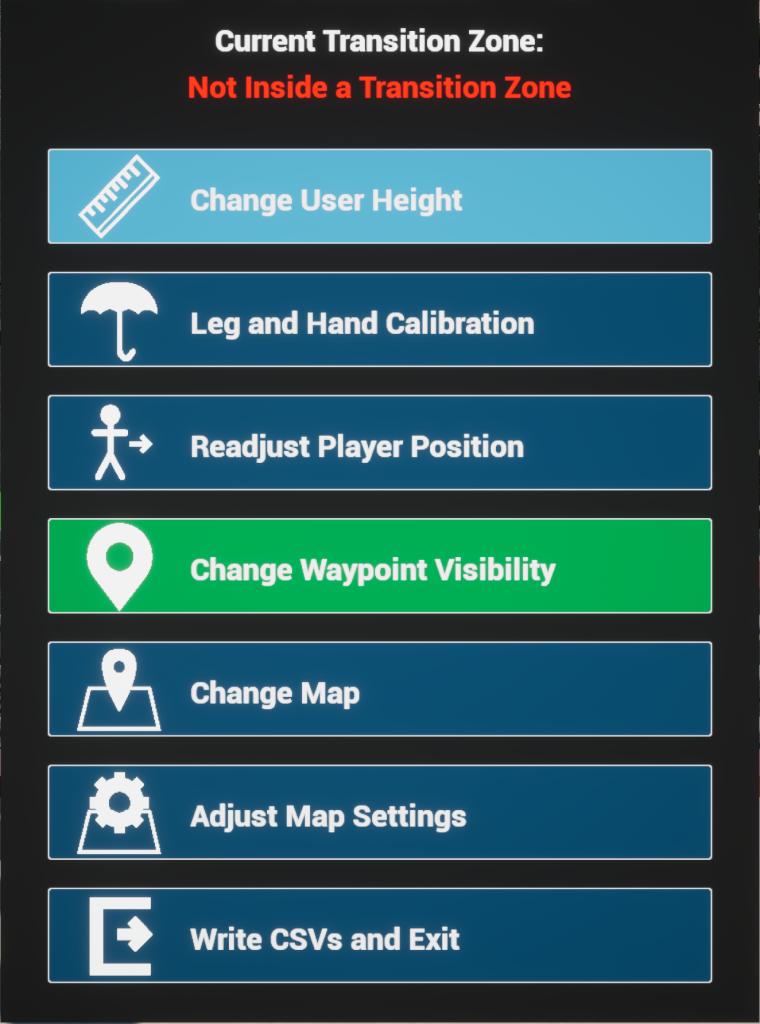
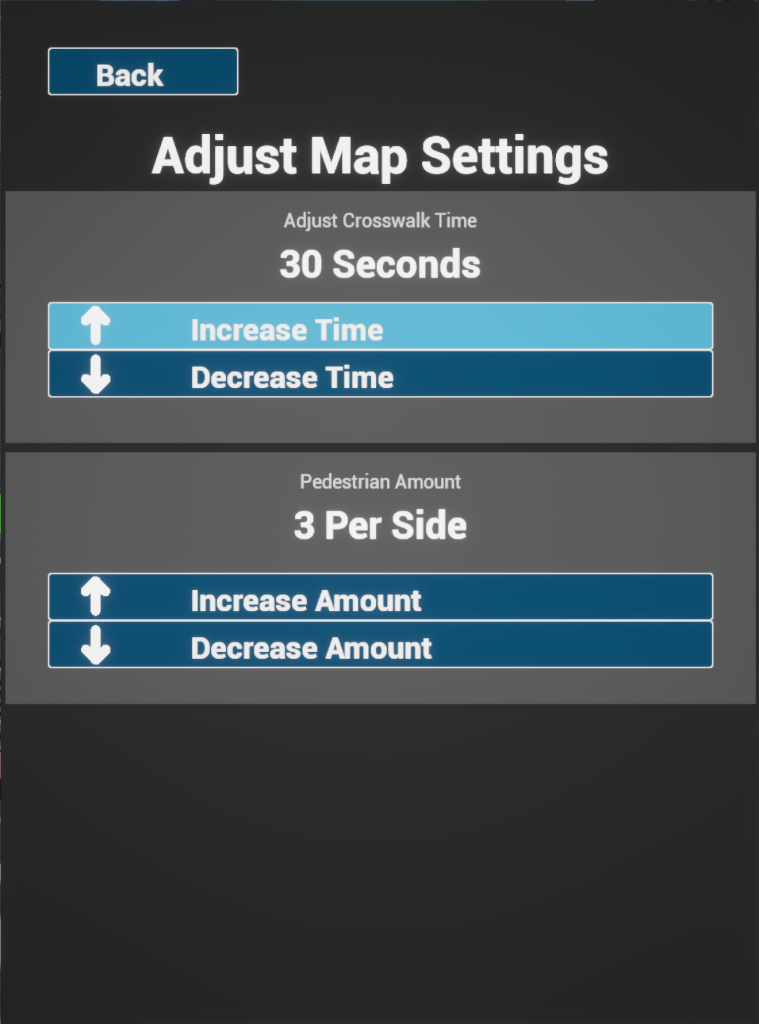
During the exercise administration, physical therapists walk alongside the patient directly to give clear instructions, and observe subtle movements. This makes it difficult for them to simultaneously control the VR environment in ways we intended. To address this, we purchased a small tablet that could be used to remote-control the computer (via Steam Link). In order to make controlling the environment easier, I created an interface that they could use.
Key Takeaways
- Preliminary data collection about relevant subjects is essential for making informed design decisions
- Unexpected challenges are common, but give you the chance to understand previously unseen design flaws
- Hands-on observation and testing in relevant locations gives insight into unexpected physical challenges